Review of functions
2026-01-15
Functions in R
We use functions all the time
What if there isn’t a built-in or package function?
Idea: avoid repetitive coding (errors, hard to maintain)
Instead:
- Extract common operations
- Wrap in a function
- Reuse
Basic Structure of a function
Name
Input arguments
- names
- default value
Body
Output values
A first function
we want to deal with missing values more gracefully
Defaults & Conditionals
Parameters can have default values. Those values are included in the function specification
Conditionals
Condition is a logical value (
TRUEorFALSE), i.e. has to be of length 1Use
&and|to combine several conditions!negates a condition (!FALSEisTRUE)
Conditionals - if()
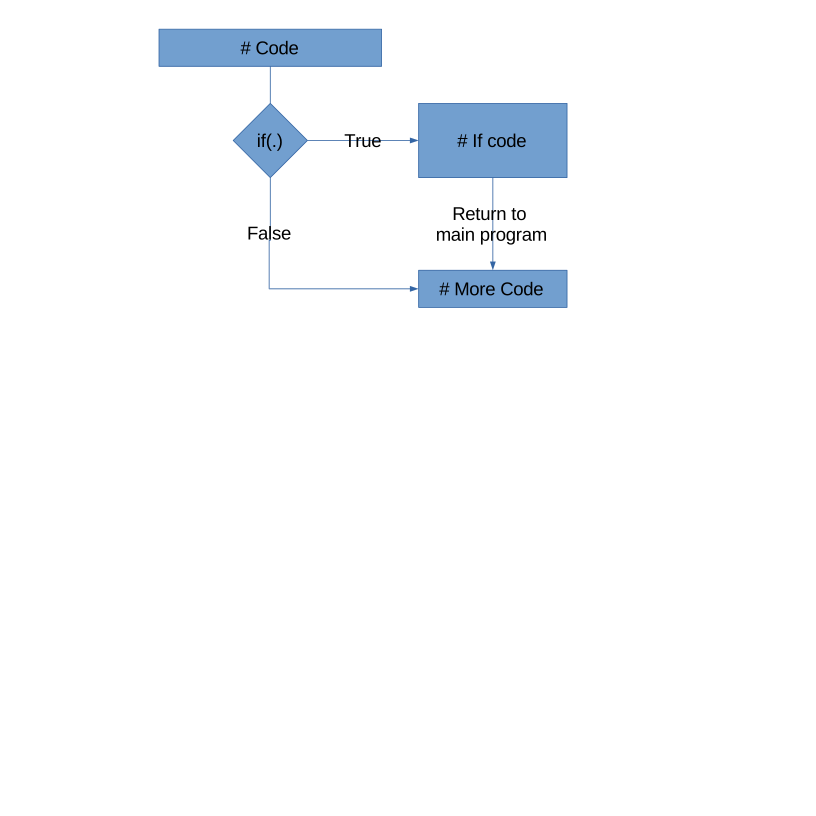
If statement block diagram
Conditionals - ifelse
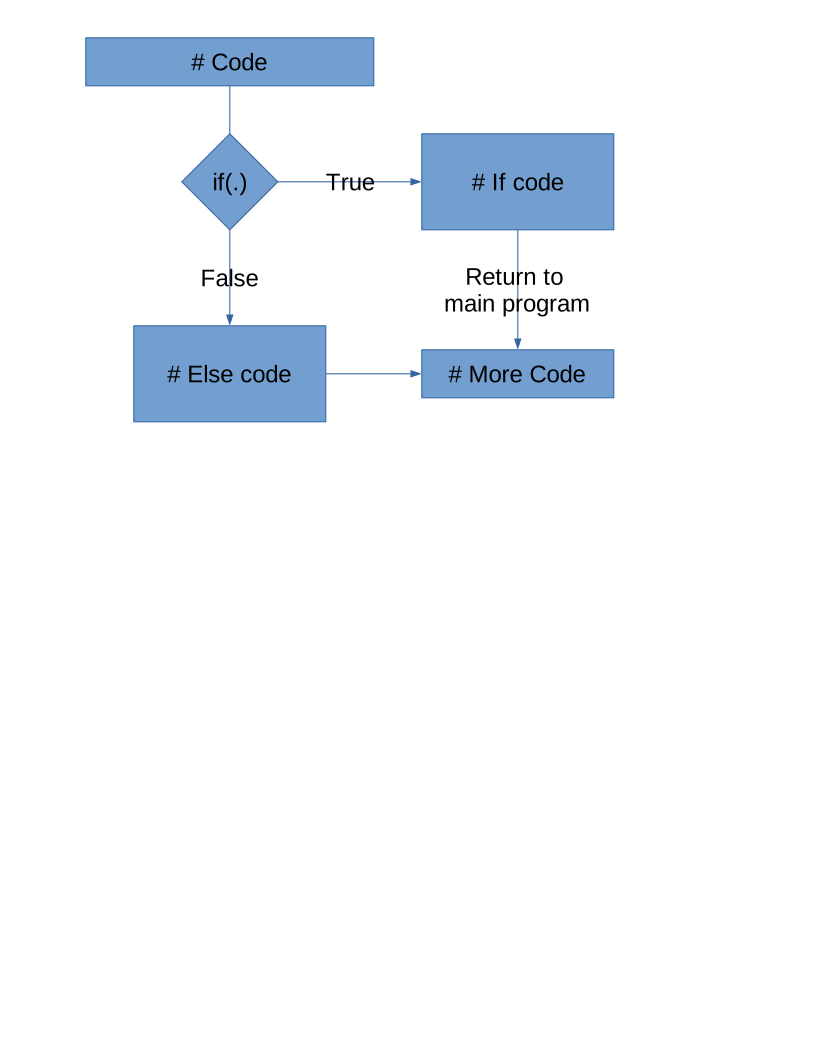
If-else statement block diagram
Function Writing
Start simple, then extend
Test out each step
Don’t try too much at once
Your Turn
Write a function
sdthat computes the standard deviation ofx“from scratch”. Include a parameterna.rmin it\(L(\lambda; x) = -n\lambda + log(\lambda) \cdot\sum x_i\) is the log likelihood function of a Poisson variable x with parameter \(\lambda > 0\)
- Write a function
loglikpoiswith parameterslambdaandx(a vector) that computes the log likelihood value for lambda given observationsx. - Make sure to check that
lambdais positive; return an error message (usingstop()) if it is not. - Plot the likelihood values for lambda between 0 and 10 for
x = c(1, 3, 2, 3, 0, 1, 0, 1, 3, 3)
- Write a function
Good Practice
Use tabs to structure blocks of statements
Build complex blocks of codes step by step
- A function should complete one task
- Chain multiple functions together with a meta-function for more complex tasks
# write comments!
Anonymous functions
also called
lambda expressionshave the form
function (x) do something in one lineorfunction (x) { do something in multiple lines }
created on-the-fly, not re-used anywhere else, not assigned a name
Questions?